
Short answer: not yet. As of 23 October 2026, Belgium has no general legal obligation to record the working time of every employee. The government is, however, preparing a preliminary draft bill that would require every employer to record each employee’s actual working time per day and per week in an objective and reliable way. The target date is 1 January 2027, with a working system by 1 April 2027.
This is not the same as CIaO. Check In and Out at Work already applies to cleaning and will definitely be extended to construction on 1 April 2027. In this article you will read what the draft bill says, what can still change, how the two obligations relate to each other and what you can usefully do today.
Status on 23 October 2026
| Topic | Status |
|---|---|
| General registration of working time | Preliminary draft bill. Not yet approved by the government, not voted in Parliament, not published in the Belgian Official Gazette. |
| Planned start | 1 January 2027, with a transition period until 1 April 2027 |
| Advice of the National Labour Council | Advice no. 2.499 of 30 September 2026, without agreement between employers and unions |
| Sanctions | Not yet determined |
| CIaO in construction | Already law (Programme Act of 30 May 2026). Starts on 1 April 2027 for work in immovable property worth at least 500,000 euros excluding VAT. |
We follow this file closely and will update this article as soon as anything changes.
What exactly does the draft bill require?
The draft bill adds a new article 38quinquies to the Belgian Employment Act of 16 March 1971 (Arbeidswet). The core in four points:
- Per employee, per day and per week. The employer records how much time each employee has actually worked.
- Objective and reliable. The registration must show the actual working time, not the planned time.
- Free choice of system. A time clock is not required. An app, a badge, software or another system is also allowed.
- Work schedules: deviations are enough. If you work with a fixed or variable schedule, you may limit yourself to recording the deviations from that schedule, as long as the actual working time can be derived from it.
According to the current text, managers, employees in a position of trust, teleworkers and travelling staff fall outside the scope. That list can still change.
What do objective and reliable mean in practice? The law will define this further. Our assessment: a registration made at the moment itself holds up better than a list filled in afterwards, and every correction must be traceable. Who changed what, when and why makes the difference during an inspection or a dispute about overtime.
Why is this obligation coming?
The trigger is a judgment of the Court of Justice of the European Union of 14 May 2019 (case C-55/18). The Court ruled that the rules on working hours and rest periods can only be enforced if employers use an objective, reliable and accessible system to measure working time.
Belgium has not yet transposed this in a general way. A parliamentary document of 5 February 2026 (DOC 56 1353/001) states that there is currently no general legal obligation. The result is legal uncertainty, especially in disputes about overtime.
What is not yet certain?
The National Labour Council issued its advice on 30 September 2026, without agreement. The positions are far apart:
| Employers’ organisations | Trade unions | |
|---|---|---|
| Principle | A general obligation is unnecessary and too heavy, especially for SMEs | Support the principle, but find the text too limited |
| Timing | At least one year after publication; January and April 2027 are not feasible | No known position |
| Form | Free choice; existing data such as time sheets and Dimona should count | Electronic registration including breaks and the full working day |
| Exceptions | No known position | No general exceptions |
| Access and retention | No known position | Access for employee and inspection, ten years of retention |
| Sanctions | No known position | Specific sanctions |
The government must now discuss the text further. Parliament follows. Only after publication in the Belgian Official Gazette are the obligations final. The start date, the exceptions, the required data and the sanctions can therefore still change.
What does this mean for your choice? If you choose a system today, choose one that can also handle the strictest scenario: electronic, with breaks, with access for the employee and with a long retention period.
Time registration and CIaO: two obligations, not the same
The two are often confused. They have a different purpose, a different scope and a different destination for the data.
| General time registration | CIaO (Check In and Out at Work) | |
|---|---|---|
| Status | Preliminary draft bill | Law: Programme Acts of 26 December 2022 and 30 May 2026 |
| Purpose | Compliance with working hours, rest periods and overtime | Fight against social fraud, insight into who is present at the workplace |
| For whom | All employers, private and public, with exceptions | Cleaning for third parties (since 1 September 2024), work in immovable property from 500,000 euros excluding VAT and ready-mixed concrete (from 1 April 2027) |
| What | Time worked per day and per week; with a schedule, the deviations | Arrival, breaks and departure per workplace |
| Who registers | The employer provides the system | The person themselves, at the workplace and in real time |
| Where the data goes | Into the employer’s own system | Into the database of the NSSO (RSZ/ONSS), via the portal, the app or a web service |

A contractor with large construction sites will therefore probably have to deal with both. CIaO covers presence on site, but not the hours in the workshop, at the office or on smaller sites below the threshold. Whether CIaO registrations will also count for the general obligation has not yet been decided. Employers do ask that existing data be taken into account.
The practical lesson: for the same employees, you do not want two separate registrations. A system that serves both obligations from one registration avoids double work. Read more about the CIaO rules on our page about the CIaO obligation.
What already applies today?
No general law does not mean nothing is regulated. For many employers a registration obligation already exists:
- Flexible working hours: employers who let employees choose their own start and end times must already have a time tracking system.
- Part-time employees: deviations from the part-time schedule must be recorded.
- Cleaning for third parties: check-in and check-out via CIaO, mandatory since 1 September 2024.
- Construction: attendance registration via Checkinatwork, via CIaO from 1 April 2027.
- Sector rules: such as the registered cash system in the hospitality sector and the tachograph and time sheets in transport.
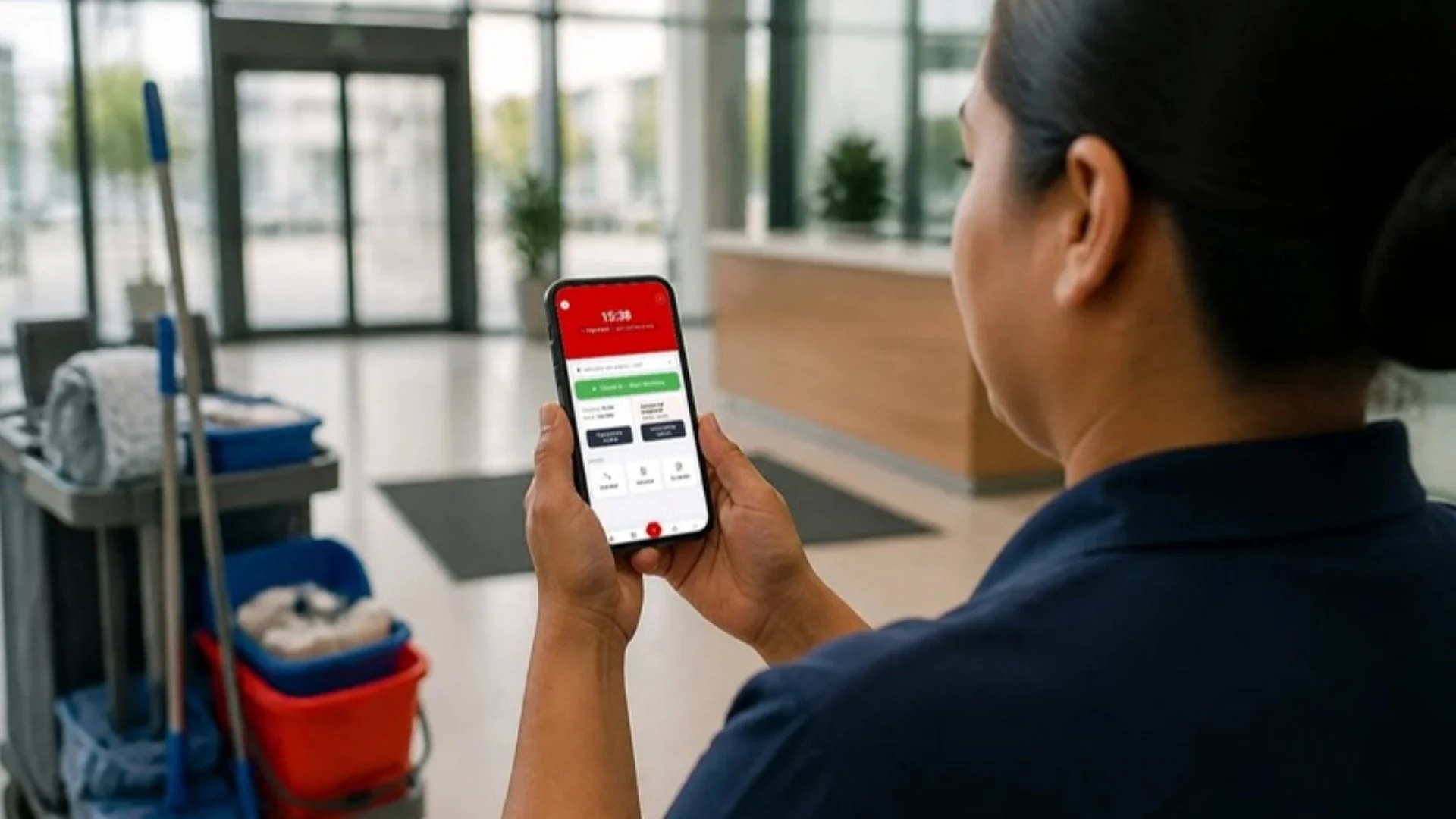
Waiting until 2027 is therefore not an option for many companies. Part of their staff is already subject to a registration obligation.
Are Excel or paper enough?
The draft bill does not impose a form, so Excel or paper is not automatically prohibited. A list that anyone can change afterwards without a trace is, however, hard to call objective. During an inspection or a dispute about overtime, it is weak evidence.
On top of that, hours in Excel later have to be retyped once more for payroll. Every handover is a chance for errors. Does that sound familiar? Then also read 7 signs Excel can no longer handle your planning.
What can you already do now?
Buying a new system just for this law is premature today. You can, however, already do the analysis, so that you can act quickly once the text is final.
- Map how you record hours today. Per group: office, workshop, field staff, site. Who records what, where and in which system?
- Determine who may fall under an exception. Managers, positions of trust, teleworkers and travelling staff. Keep in mind that this list can still change.
- Look at the overlap with CIaO. Which employees already register via CIaO or Checkinatwork, or will have to from 1 April 2027?
- Follow the path from registration to payslip. How many times are hours retyped before they reach the social secretariat? That is where most errors occur.
- Write down your requirements for a system. Use the checklist below.
- Discuss it with your social secretariat and include a possible tool in the 2027 budget.
For those who already fall under CIaO or are already struggling with payroll corrections, waiting is a risk. If you choose now, choose a solution that can also carry the general time registration. Read on go-virtual.com how better aligning planning, time registration and payroll preparation helps.
Checklist: what must a time registration system meet?
This list is based on the draft bill and on the requirements the unions set out in the advice of the National Labour Council. That way you are prepared even if the final law turns out stricter.
- The employee registers personally, at the moment itself, not afterwards
- Start, end and breaks are recorded
- Deviations from the work schedule are immediately visible
- Every correction is traceable: who, when and why
- The employee can view their own registrations
- It works on the move and at multiple locations, not just at one door
- For CIaO workplaces, registrations go directly to the NSSO
- Validated hours go to payroll without retyping
- Data is kept long enough and complies with the GDPR
How MyVIRO helps
MyVIRO is the employee self-service app (ESS app) of GO-VIRTUAL. Your employees record their own start, breaks and end, on their own device and with location check. For workplaces that fall under CIaO, registrations go directly to CIaO via the NSSO web service. One registration thus serves both obligations.
In the back office you immediately see missing check-ins, deviating locations and pending approvals, before payroll preparation starts. Validated data flows on to your HR, ERP or payroll system. MyVIRO does not calculate wages itself. If you want to go further, connect MyVIRO to VIRO for pre-payroll.
Time registration is often the first step. In the same app, employees also request leave, report sickness, submit expenses and consult documents. Your data stays in Belgium.
- See how MyVIRO works, from app to back office
- Read what MyVIRO does for companies or for social secretariats
- Compare the packages
See how your employees can register correctly today, whatever the law will require in 2027.
Read also
- Management by exception: checking time records and payroll for deviations
- Monthly payroll preparation checklist: what to send your social secretariat
- Is travel time working time? How to record mobility correctly for payroll
Frequently asked questions about time registration in 2027
Not certain yet. On 23 October 2026, the general registration obligation is a preliminary draft bill. The government is aiming for 1 January 2027, with time until 1 April 2027 to get a system working. The date is only final after publication in the Belgian Official Gazette.
No. The draft bill leaves the choice of system to the employer. An app, a badge or software is also allowed, as long as the registration is objective and reliable.
According to the draft bill, with a fixed or variable schedule you may limit yourself to the deviations, as long as the actual working time can be derived from them. A schedule with only planned hours is not enough.
According to the current text, no. Managers, employees in a position of trust, teleworkers and travelling staff fall outside it. The unions want to remove these exceptions, so this may still change.
CIaO records presence at a workplace in cleaning and, from 1 April 2027, on large construction sites. The person registers personally and the data goes to the NSSO. General time registration concerns the hours worked by all employees, in a system chosen by the employer.
That has not yet been decided. Employers ask for existing data to count. A system that feeds both CIaO and your own time registration from one registration avoids double work.
No sanctions have yet been set for the general registration obligation. Fines per person concerned already apply for CIaO, and the existing rules apply to flexible working hours and part-time work.
The draft bill does not prohibit it. A list that can be changed afterwards without a trace is, however, weak evidence during an inspection or a dispute about overtime.
Sources
- Preliminary draft bill inserting article 38quinquies into the Employment Act of 16 March 1971, submitted for advice to the National Labour Council on 26 March 2026
- National Labour Council, advice no. 2.499 of 30 September 2026
- Belgian Chamber of Representatives, DOC 56 1353/001 of 5 February 2026
- Court of Justice of the European Union, judgment of 14 May 2019, case C-55/18
- KMO.partners, “Werkgevers moeten mogelijk tegen 1 april 2027 de arbeidstijd van hun personeel registreren”, 7 October 2026 (in Dutch): kmo.partners
- NSSO, Check In and Out at Work (in Dutch): socialsecurity.be
- NSSO, Work in immovable property (in Dutch): socialsecurity.be
Author: Jean-Philippe Delberghe at MyVIRO. Published on 23 October 2026. Last updated on 23 October 2026.
This article is an informative explanation and not legal advice. The legislation is still being prepared. Consult your social secretariat for your specific situation.